Container Home vs Brick House in Kenya: Full Comparison 2026
Kenya's housing market offers a genuine choice between two very different construction methods: the traditional brick (or concrete block) house and the emerging container home. Both have real advantages. Both have real limitations. This guide puts them head to head across every factor that matters to a Kenyan buyer or investor in 2026, so you can make the right decision for your situation.
Need an exact quote? Call us now.
We answer container questions 24/7.
Cost Comparison: Container vs Brick
Container homes are typically 20–40% cheaper than equivalent brick construction for the same floor area. Here is why:
Material cost: The container itself provides all four walls, the floor structure, and the ceiling frame in one purchase. Brick construction requires you to buy and pay to lay every block individually, plus mortar, reinforcing bars, concrete, and formwork.
Labour cost: Container fabrication is done in a controlled workshop where labour is efficient and waste is minimal. Brick construction is labour-intensive on-site work that is affected by weather, supervision quality, and daily rates.
Time-money interaction: This is the most underrated cost factor. Brick construction takes 9–18 months. During this period you are paying rent elsewhere (or forgoing rental income if building an investment). A container home takes 6–10 weeks. You start living in or renting out your property 10–15 months earlier.
Worked example — 2-Bedroom, Kitengela 2026: - Container home (two 40ft HC, complete): Kshs 1,700,000 - Brick house (2BR, standard spec): Kshs 2,100,000 - Container saves: Kshs 400,000 upfront, plus 12 months of rent foregone (Kshs 180,000–240,000) - Total effective saving: Kshs 580,000–640,000 in favour of the container home
Where brick can be cheaper: On very small structures (a single room under 15sqm), brick construction with simple block walls and an iron sheet roof can undercut container fabrication costs. This is rare for full homes but worth noting.
Speed: The Container Home Advantage
This is the starkest difference between the two construction methods.
Container home timeline (from deposit to move-in): - Foundation preparation: 1–2 weeks - Off-site fabrication (simultaneous with foundation): 4–6 weeks - Delivery, placement, utilities: 1–2 weeks - Total: 6–10 weeks
Brick house timeline (from ground-breaking to move-in): - Foundation and DPC: 3–5 weeks - Block walling to wall plate: 8–16 weeks - Roof structure: 2–4 weeks - Plumbing, electrical roughing: 3–5 weeks - Plastering, painting, fitting out: 6–10 weeks - Total: 22–40 weeks (5–10 months minimum; often 12–18 months in practice)
Why does it matter? If you are building a rental investment: - A container investor starts collecting rent at month 2 - A brick investor starts collecting rent at month 14 - At Kshs 18,000/month rent, that is Kshs 216,000 in extra rental income the container investor earns while the brick investor is still building
If you are building your own home to move out of rented accommodation: - Container: Stop paying rent after 2 months - Brick: Pay rent for another 12–18 months
The speed advantage in a high-rent-cost country like Kenya is a genuine financial benefit, not just a convenience.
Durability: Which Lasts Longer?
The honest answer: both can last 50+ years with proper maintenance. Corten steel has structural advantages in some respects; brick has advantages in others.
Container (Corten steel): - Tensile strength: ~470 MPa (very high) - Resistance to ground movement: Excellent. The rigid steel frame flexes slightly rather than cracking under seismic or settlement stress - Pest resistance: Complete. Termites cannot eat steel - Fire resistance: Steel is non-combustible but conducts heat, which can cause interior damage in a fire - Expected structural life: 30–50+ years on land with maintenance - Weak point: Surface corrosion if paint maintenance is neglected
Brick house: - Compressive strength: High, but brittle under tensile stress - Resistance to ground movement: Vulnerable to cracking if foundations settle or in earthquake-prone areas - Pest resistance: Partial — termites can destroy roofing timbers even in a brick house - Fire resistance: Brick walls are fire-resistant, but timber roof structures are not - Expected structural life: 40–70 years with proper maintenance - Weak point: Foundation settlement, rising damp, and roof timber deterioration
Conclusion: For most Kenyan soil types and climate zones, both construction methods are comparably durable over a 30-year horizon. Container homes have a genuine edge in pest resistance and resistance to settlement cracking. Brick has a slight edge in fire resistance for the wall structure itself.
Heat and Comfort: The Great Container Myth
The most common objection to container homes is: "Won't it be like an oven?" The short answer is: not with proper insulation, and no more so than a tin-roof brick house in the same conditions.
Uninsulated container: Yes, a bare steel container in direct Kenyan sun gets extremely hot — reaching 55°C+ inside. Nobody should live in an uninsulated container. This is not a design choice; it is a construction defect.
Properly insulated container (40mm closed-cell spray foam + reflective roof paint): - Interior temperature on a 32°C Nairobi day: 26–28°C (same as a well-ventilated brick house) - The spray foam has an R-value of approximately 6.5 per 25mm (twice as effective per millimetre as standard mineral wool) - Once the thermal mass of the insulation is cooled (evenings), the interior stays cool well into the next morning
Brick house: - Brick has high thermal mass — it absorbs heat slowly during the day and releases it slowly at night - In Nairobi's moderate climate, this is an advantage (stays warm overnight in the cold season) - In hot climates (Mombasa, Kisumu, Garissa), high thermal mass means the walls absorb heat all day and radiate it at night — making the house uncomfortable without AC
Verdict: For Nairobi's temperate climate, properly insulated container homes and brick homes are comparably comfortable. For hot climate zones, a well-insulated container with AC actually performs better than a thermally heavy brick house because it cools down faster.
Resale Value and Financing Access
This is where brick still wins in Kenya's current market — but the gap is closing.
Resale: - Brick houses are more liquid in Kenya's resale property market. Buyers and their families are familiar with them, and valuers have well-established pricing benchmarks - Container homes have a smaller but growing resale market. Prices are less predictable and the pool of buyers is smaller - The land the container sits on appreciates normally regardless of what is built on it — your land investment is sound either way
Financing: - Kenyan commercial banks (KCB, Equity, Co-op, NCBA) will readily mortgage a brick house. Loan-to-value ratios of 70–80% are available - Most banks still classify container homes as non-permanent or temporary structures and will not mortgage them. Some SACCOs and a handful of microfinance institutions will lend against container homes with proper permits and structural engineer certificates - This financing gap is a genuine disadvantage for buyers who need borrowing to build
The trend: Several Kenyan lenders are beginning to accept container homes as collateral. With proper NCA registration, county building permits, and structural engineer certification, the financing environment is improving. We expect commercial bank financing for container homes to be mainstream in Kenya within 3–5 years.
Design Flexibility
Container homes: Design is constrained by the container's fixed dimensions (2.35m wide). Individual rooms are therefore rarely wider than 2.35m unless containers are merged (which requires structural steel work). However, length is unconstrained, and adding containers in any direction is straightforward.
- Best for: Compact, linear, loft-style designs; two-storey stacked configurations; modular expansion
- Challenging for: Wide open-plan living rooms (require container merging), traditional symmetrical house facades
Brick houses: Almost unlimited design flexibility. Rooms can be any width, any depth, any shape. Curved walls, bay windows, and irregular floor plans are all achievable with brick.
- Best for: Traditional Kenyan house styles, symmetrical facades, wide rooms
- Challenging for: Fast construction, remote or difficult-access sites
The creative sweet spot: The most exciting container home designs in Kenya use the container's industrial aesthetic as a feature rather than a limitation — exposed steel elements, cantilevered upper floors, full-height glass end walls, rooftop terraces. If you embrace rather than fight the container's geometry, you can achieve designs that are impossible with brick.
Container Home vs Brick House — Side-by-Side Comparison
Figures for a standard 2-bedroom residential build in Nairobi satellite towns, 2026.
💡 These are indicative ranges. Call us for your exact quote: 0715 557 559
Frequently Asked Questions
Is a container home cheaper than a brick house in Kenya?+
Yes, typically 20–40% cheaper for equivalent floor area. A complete 2-bedroom container home costs roughly Kshs 1,700,000 versus Kshs 2,100,000+ for a comparable brick house. When you add the time savings (you start earning rent or stop paying rent 10+ months earlier), the total financial advantage is even larger.
Which lasts longer — a container home or a brick house?+
Both can last 30–70 years with proper maintenance. Corten steel has advantages in pest resistance and resistance to settlement cracking. Brick has advantages in thermal mass and fire resistance of walls. For most Kenyan locations, both are comparably durable over a typical investment horizon.
Are container homes hotter than brick houses in Kenya?+
No — not if properly insulated. An uninsulated container gets extremely hot, but this is a construction defect, not a property of well-built container homes. A properly insulated container home with reflective roof paint and cross-ventilation is as comfortable as a brick house in Nairobi's climate.
Can I get a bank loan for a container home in Kenya?+
Most major Kenyan banks still decline mortgage applications for container homes, classifying them as temporary structures. SACCOs, microfinance institutions, and company loans are commonly used. This financing gap is expected to close as container homes become more mainstream with full county permits and NCA certification.
Which is better for rental investment in Kenya — container or brick?+
For investors prioritising cash flow and speed, container homes win: lower build cost, faster to rental income, and strong demand in Nairobi's satellite towns. For investors prioritising financing access and a liquid resale market, brick is currently safer. The container home market is maturing rapidly.
Can a container home be made to look like a brick house?+
Yes. External brick-effect cladding, painted render, or timber board finishes make a container home visually indistinguishable from a conventional house. Many Frontier Containers clients choose this to maximise resale appeal and rental market acceptance.
Which is better for a plot with black cotton soil?+
Both require appropriate foundations for black cotton soil (expansive soil). Container homes have an advantage in that their steel frame tolerates slight differential settlement better than rigid brick walls, which crack under the same movement. A well-engineered foundation is essential for both.
Ready to Buy?
Call or WhatsApp us for pricing on any container product in Kenya.
Related Guides
Container Guides & Insights
Expert advice on prices, buying, and building with shipping containers across Kenya.
 24 May 2025
How Much is the Cost of Used Shipping Container in Kenya
Are you thinking about buying a used shipping container in Kenya? It’s a smart move for many needs, from storage to building unique spaces. But the first question on everyone’s mind is: “How much will it cost?” Read on to find out.
Read Article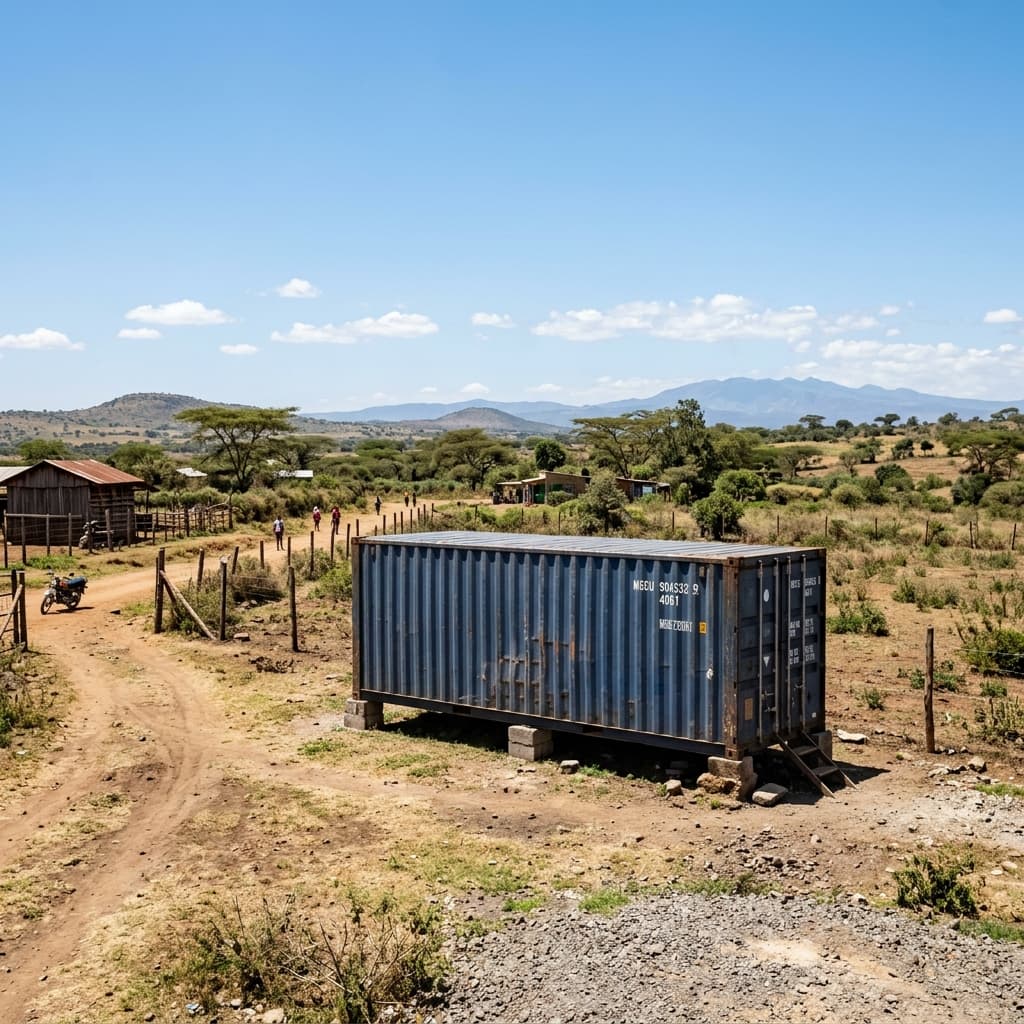 24 May 2025
How Much is the Price for a 40ft Shipping Container in Kenya?
Are you looking to buy a 40ft shipping container in Kenya? This is a popular choice for many projects, from big storage needs to building spacious container homes or offices. One of the first questions people ask is about the price.
Read Article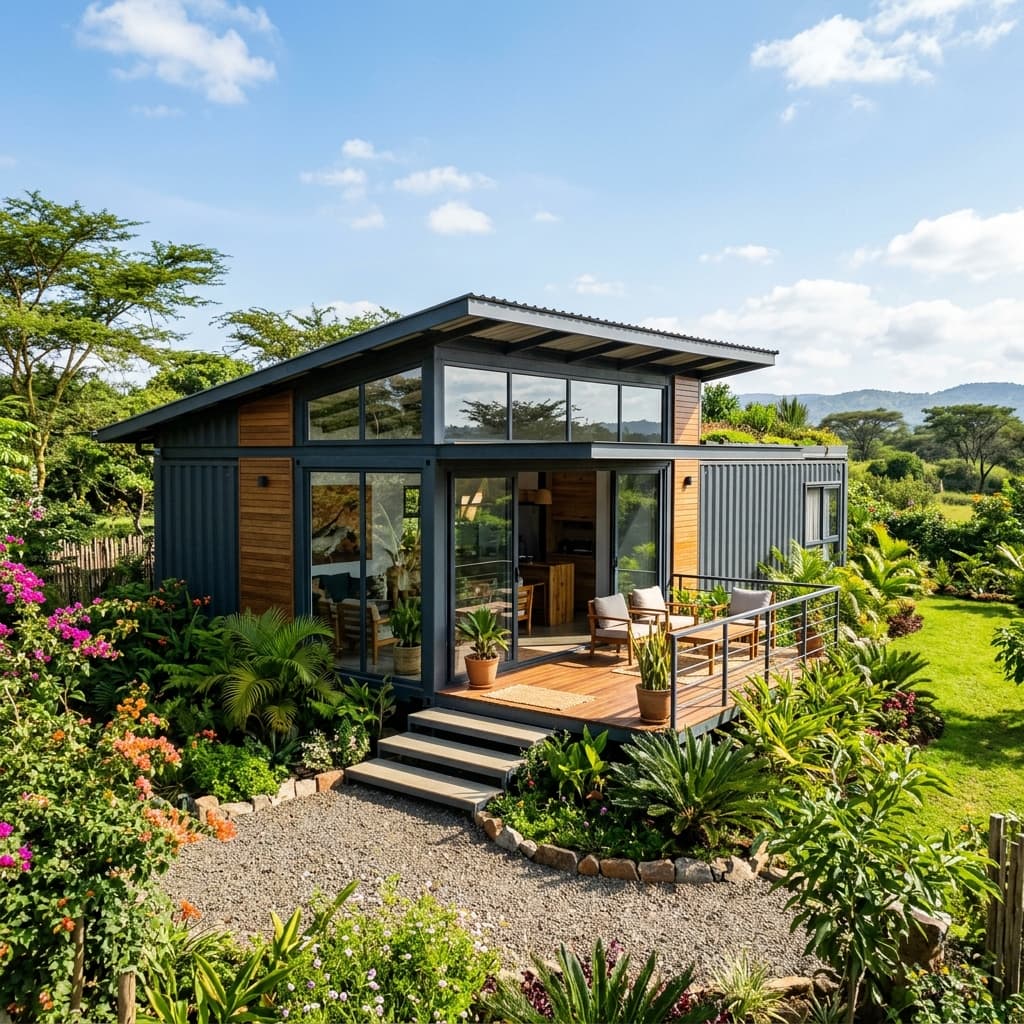 2 June 2025
How much does a container home cost in Kenya?
Dreaming of a unique, affordable, and stylish home in Kenya? A container home could be your answer! Shipping containers are strong, eco-friendly, and can be transformed into beautiful living spaces. But how much does a container home cost in Kenya?
Read Article