Container Delivery & Transport in Kenya — How It Works 2026
Buying the right container is only half the battle — getting it to your site safely is the other half. Container delivery in Kenya involves specialised trucks, careful site assessment, and preparation on your end. This guide walks you through exactly how container delivery works in Kenya, the two main truck types used, what your site needs to accommodate delivery, what you should prepare in advance, and realistic delivery costs from Nairobi to every major region in Kenya.
Need an exact quote? Call us now.
We answer container questions 24/7.
The Two Types of Container Delivery Trucks in Kenya
Container delivery in Kenya uses two main truck configurations, each suited to different container sizes and site conditions:
Tilt-Bed (Side-Loader) Truck: A tilt-bed truck carries the container on a low-loader bed that can tilt to one side at an angle. As the truck reverses into position, the bed tilts and the container slides off onto the ground at the desired location. The container ends up at ground level — ideal for storage containers, shops, and sites where the container will sit directly on the ground.
Advantages: - Can place the container at a very precise ground-level position - Works in slightly tighter spaces than a crane truck - Lower operating cost (reflected in lower delivery prices)
Limitations: - The container must be lowered onto flat, firm ground — no placing on plinths or raised foundations - Less suitable for very soft ground where tilting risks the container sinking - Cannot stack containers (no lifting capability)
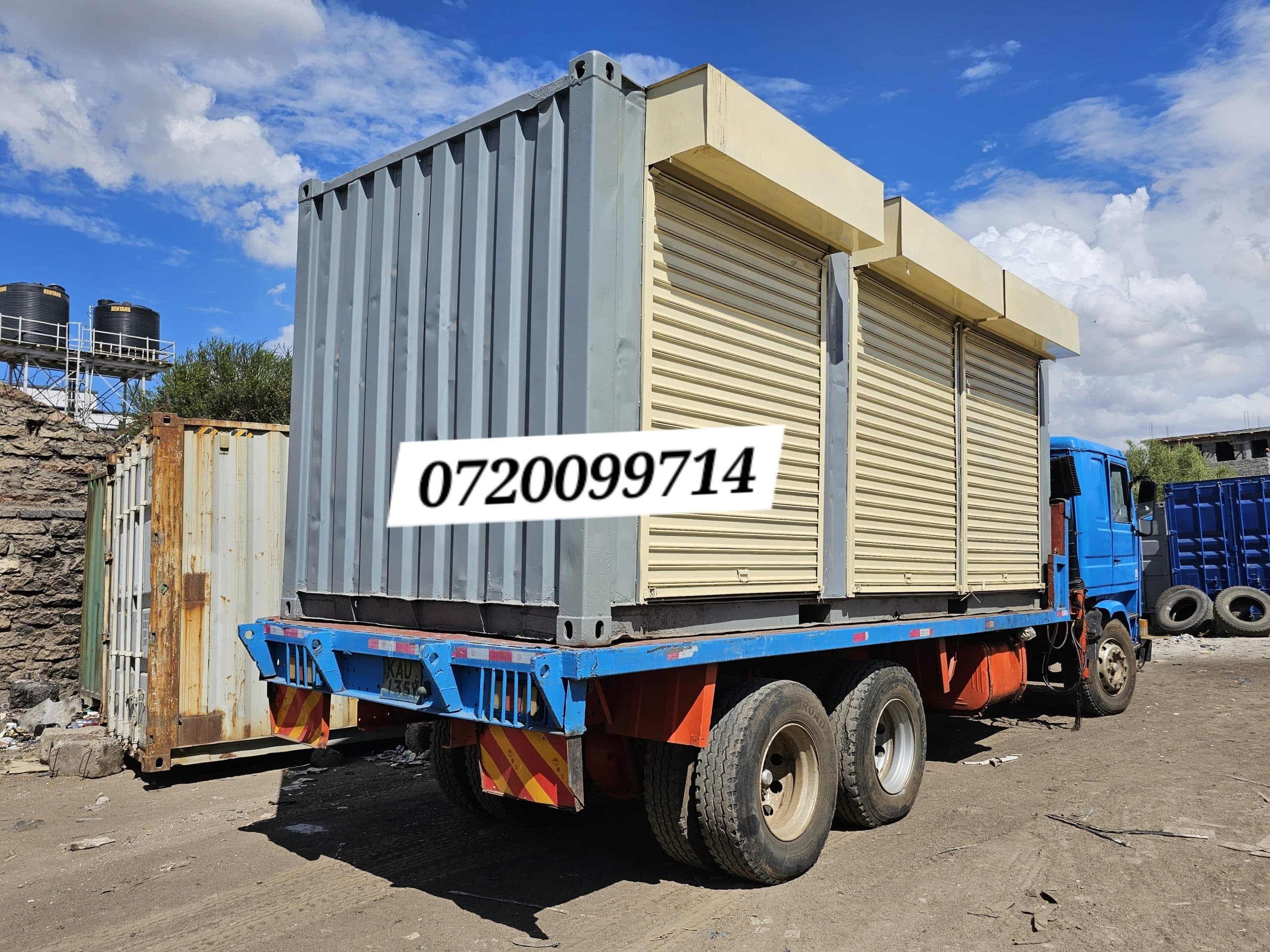
Crane Truck (Self-Loading Crane): A crane truck has a hydraulic crane arm mounted on the truck chassis, capable of lifting the container and placing it at any position the crane can reach — including on top of foundations, walls, or even onto another container.
Advantages: - Can place the container on raised foundations (concrete piers, grade beams) - Can stack containers two-high (container homes, commercial buildings) - Can place the container over obstacles (fences, walls) that a tilt-bed cannot pass - More versatile for complex site layouts
Limitations: - Requires adequate clearance around the crane's working radius (typically 5–8 metres) - Slightly more expensive than tilt-bed delivery - The crane arm requires overhead clearance (beware power lines)
Which type for your delivery: For a ground-level storage container with good access: tilt-bed is sufficient and cheaper. For any container being placed on a foundation, stacked, or positioned in a complex site: specify a crane truck. Call us to discuss your specific site requirements.
Site Requirements — What Your Delivery Site Needs
Preparing your site correctly before delivery day prevents costly delays, damage to your property, and in worst cases, the container not fitting at all. Here is what each container size needs:
For a 20ft Container:
Road access: - Minimum road width: 3 metres (4 metres strongly preferred) - Minimum overhead clearance on the access route: 4.5 metres (watch for power lines, tree branches, bridges) - Minimum turning radius at the tightest point: 10 metres - The truck itself is approximately 10–12 metres long — ensure it can enter, position, and exit your site
Ground conditions: - Firm ground at the delivery point — the truck must be able to position without sinking - If ground is soft, lay hardcore, murram, or steel plates at the truck's standing position - Level surface within 5–10 degrees at the container placement point
Space for the container: - Clear area at least 8 metres × 4 metres at the placement point - Overhead clearance of 3.5 metres minimum directly above the placement spot (for tilt-bed) or 6+ metres (for crane)
For a 40ft Container:
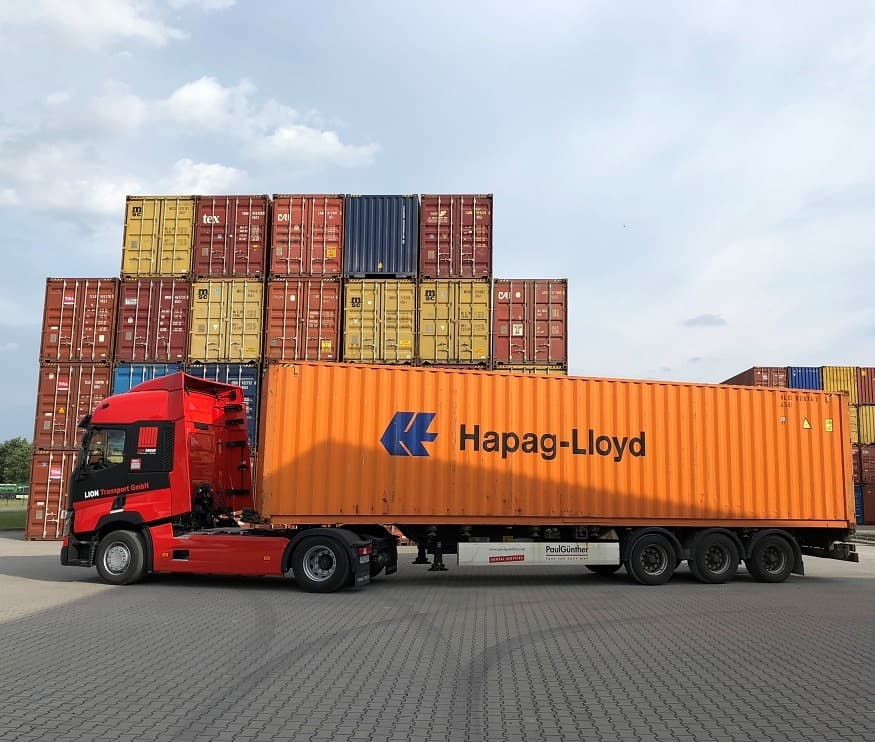
Road access: - Minimum road width: 4 metres (5 metres strongly preferred) - Overhead clearance: 4.8 metres minimum along the entire access route - Turning radius at tightest point: 15–18 metres - The truck + container combo is over 20 metres long — many narrow estate roads cannot accommodate this
Ground conditions: - Same firm ground requirements as 20ft, but a heavier truck (8–12 wheels) puts more ground pressure - Any soft spots must be reinforced before the truck arrives
Space for the container: - Clear area at least 16 metres × 5 metres at the placement point - No overhead obstacles within the crane/tilt swing radius
The site inspection step: For all 40ft deliveries and any 20ft delivery with access concerns, we strongly recommend you send us photos or a video of the access road and placement area before booking delivery. This allows us to confirm feasibility and select the right truck configuration.
What to Prepare Before Delivery Day
A smooth delivery requires preparation on your side. Here is the checklist to work through before your container arrives:
Foundation / placement surface: If placing on concrete piers or a grade beam, ensure the foundation is complete and cured (concrete needs at least 7 days to cure before taking load). Mark the exact placement position clearly on the ground. All four corner points must be at the same level — level the foundation before delivery, not after.
Clear the access route: Walk the entire access route from the main road to your plot. Remove: - Low-hanging branches (anything under 5 metres) - Temporary structures, scaffolding, or building materials on the road - Parked vehicles that narrow the road - Gates that do not open wide enough — measure the gate and compare to truck width
Confirm utilities: Walk under the access route and placement area looking up. Identify all: - Power lines (Kenya Power, private connections) - Telephone/data lines - Any overhead water pipes or irrigation lines
Power lines are the most common delivery problem. Call Kenya Power or KPLC if lines are low — they can temporarily raise or disconnect lines for delivery (with advance notice and a fee).
Ground preparation at placement: - Level the placement area to within 50 mm horizontally - If soft ground: lay a 150 mm layer of compacted hardcore - Mark the four corner positions of the container with pegs
Notify neighbours if needed: If delivery requires temporarily blocking a shared road, give neighbours advance notice.
Be present: You or a trusted representative must be on site during delivery. The driver will need instructions on exact placement position. Container position adjustments after delivery are very difficult and costly.
Container Delivery Process — Step by Step
Understanding the delivery process helps you coordinate and set realistic expectations:
Step 1: Booking and scheduling Call 0715 557 559 to confirm your container purchase and schedule delivery. We typically need 2–5 business days lead time for delivery scheduling. For upcountry deliveries, 5–7 days' notice is preferred.
Step 2: Route survey (if required) For 40ft containers or challenging sites, our logistics team may drive the route before delivery to identify obstacles. You may be asked to share photos or GPS location of your site.
Step 3: Day of delivery The driver calls you 2–3 hours before arrival. Ensure your site is clear and the access route is unobstructed.
Step 4: On-site manoeuvring The truck reverses slowly into position using a banksman (a spotter who guides the driver). This process can take 15–45 minutes for complex sites. Do not rush the driver — safe positioning is critical.
Step 5: Container placement The tilt-bed tilts or the crane arm lifts and lowers the container onto the prepared spot. The container is typically left locked.
Step 6: Inspection Before the driver leaves, do a visual inspection of the container's condition. Note any transit damage on the delivery note. For WWT and better grades, the container should be watertight on delivery.
Step 7: Final positioning (if adjustment needed) Minor adjustments can be made using a hydraulic jack and steel rollers while the truck is still present — specify any final positioning needs before the driver leaves.
Container Delivery Costs Across Kenya 2026
Delivery costs depend on container size, distance, road conditions, and whether a crane truck is required. These are 2026 indicative costs from our Nairobi yard:
20ft Container Delivery: - Within Nairobi (Westlands, Industrial Area, Kasarani, etc.): Kshs 15,000 – 35,000 - Kiambu town / Ruiru / Juja: Kshs 25,000 – 40,000 - Thika town and surrounds: Kshs 30,000 – 45,000 - Machakos / Athi River: Kshs 30,000 – 50,000 - Naivasha: Kshs 40,000 – 60,000 - Nakuru town: Kshs 50,000 – 70,000 - Nyeri / Karatina: Kshs 55,000 – 75,000 - Meru / Embu: Kshs 60,000 – 85,000 - Kisumu / Kakamega: Kshs 80,000 – 110,000 - Eldoret / Kitale: Kshs 70,000 – 95,000 - Mombasa (by road): Kshs 90,000 – 120,000
40ft Container Delivery (add approximately 40–60% to 20ft rates): - Within Nairobi: Kshs 25,000 – 50,000 - Nakuru: Kshs 70,000 – 95,000 - Kisumu: Kshs 100,000 – 135,000 - Mombasa: Kshs 110,000 – 150,000
Crane truck surcharge: If your site requires a crane truck rather than a tilt-bed, add Kshs 10,000 – 20,000 to the base delivery rate.
After-hours or weekend delivery: Deliveries outside normal hours (7 AM – 6 PM weekdays) may incur a surcharge of Kshs 10,000 – 25,000.
Note: All delivery prices are subject to road conditions and fuel costs. Very remote or rough-terrain sites may be priced higher. Always call for an exact quote for your specific location.
Container Delivery Cost Reference — Kenya 2026
Costs from our Nairobi yard. All delivery includes transport and on-site placement. Call 0715 557 559 for your exact delivery quote.
💡 These are indicative ranges. Call us for your exact quote: 0715 557 559
Frequently Asked Questions
How long does container delivery take in Kenya?+
Within Nairobi, delivery typically takes 1–3 business days after payment confirmation. Upcountry deliveries take 3–7 business days. Same-day delivery within Nairobi is sometimes possible for urgent requirements — call to confirm availability.
What happens if my road is too narrow for the delivery truck?+
If the access road is too narrow, the driver cannot safely deliver the container. In some cases, we can arrange a smaller crane truck or an alternative route. In other cases, the buyer needs to widen or clear the access route before rescheduling. Always send us photos of your access road in advance for 40ft deliveries.
Does delivery include offloading or do I need a separate crane?+
Our delivery service includes on-site offloading — either by tilt-bed or self-loading crane. You do not need to hire a separate crane for standard deliveries. For very tight sites or stacking containers, a separate mobile crane hire may occasionally be needed.
Can you deliver to rural or upcountry Kenya?+
Yes. We deliver across Kenya including all major towns and rural areas. For remote locations with unpaved roads, we assess the route beforehand. Some very remote locations may require additional site preparation (road widening, reinforcement) before delivery is possible.
What if the container is damaged during delivery?+
Inspect the container immediately when the truck arrives and before the driver departs. Note any transit damage on the delivery receipt. Contact our office immediately — transit damage is rare but we address it when it occurs. Do not accept a container in worse condition than agreed without noting it on the delivery documentation.
Do I need to be present for container delivery?+
Yes — you or a trusted representative must be on site during delivery. The driver needs your instruction on exact placement, and you need to inspect the container and sign the delivery note. Unattended deliveries can result in incorrect placement that is very costly to correct.
Ready to Buy?
Call or WhatsApp us for pricing on any container product in Kenya.
Related Guides
Container Guides & Insights
Expert advice on prices, buying, and building with shipping containers across Kenya.
 24 May 2025
How Much is the Cost of Used Shipping Container in Kenya
Are you thinking about buying a used shipping container in Kenya? It’s a smart move for many needs, from storage to building unique spaces. But the first question on everyone’s mind is: “How much will it cost?” Read on to find out.
Read Article 24 May 2025
How Much is the Price for a 40ft Shipping Container in Kenya?
Are you looking to buy a 40ft shipping container in Kenya? This is a popular choice for many projects, from big storage needs to building spacious container homes or offices. One of the first questions people ask is about the price.
Read Article 2 June 2025
How much does a container home cost in Kenya?
Dreaming of a unique, affordable, and stylish home in Kenya? A container home could be your answer! Shipping containers are strong, eco-friendly, and can be transformed into beautiful living spaces. But how much does a container home cost in Kenya?
Read Article