Container Homes as Investment in Kenya: Pros, Cons & ROI (2026)
Before you commit a million shillings or more to a container home in Kenya, you deserve an honest analysis — not a sales pitch. This guide covers the genuine advantages, the real drawbacks, how container homes compare to brick construction as an investment, what the permit process looks like, and real rental income numbers to help you model your return on investment.
Need an exact quote? Call us now.
We answer container questions 24/7.
The Case FOR Container Homes in Kenya
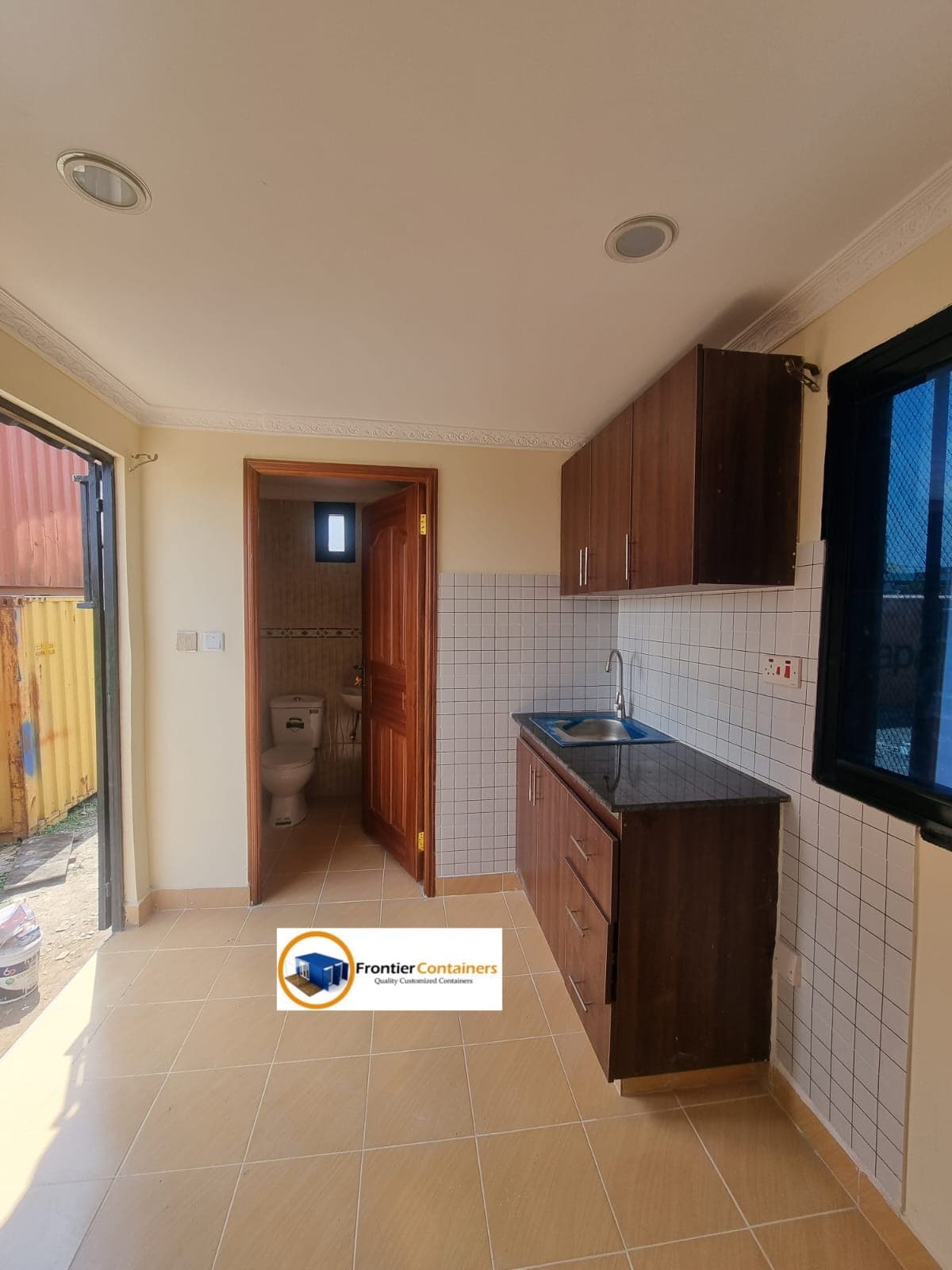
1. Cost: 20–40% cheaper than brick for equivalent space A complete 1-bedroom container home with all fittings costs Kshs 900,000–1,400,000. An equivalent brick 1-bedroom in the same area costs Kshs 1,200,000–2,000,000+. The saving is real and significant, especially when you are building multiple units.
2. Speed: 6–10 weeks vs 9–18 months This is the most underrated advantage. With brick construction, you are paying for land and waiting over a year before seeing any rental income. A container home can be earning rent within 8 weeks of your deposit. If you are borrowing to build, the faster payback dramatically reduces interest cost.
3. Structural durability Corten steel used in shipping containers has a tensile strength of 470 MPa, roughly four times that of mild steel. The structure is engineered to be stacked nine containers high at sea — it will not crack, shift, or fail due to ground settlement the way brick can. With annual maintenance, a container home outlasts most brick alternatives in Kenya.
4. Portability and resale optionality If your land situation changes — you sell the plot, you relocate — a container home can be partially disassembled and moved to your new location. This is not cheap or easy, but the option exists. A brick house stays on the land, forever.
5. Modularity — grow as you can afford it Start with a 1-bedroom, add a second container in two years, add a third in four years. Container homes expand in defined units without demolishing what you have built. This suits Kenya's incremental building culture.
6. Minimal wastage and cleaner construction Because the fabrication is done off-site in a controlled workshop, there is far less site wastage (sand, cement, timber formwork). Your plot does not become a construction site for 12 months. This matters enormously for urban plots close to existing structures.
The Honest Drawbacks of Container Homes
1. Heat — real risk if poorly insulated An uninsulated steel container in direct Kenyan sun can reach 50–60°C inside. This is the biggest risk for buyers who cut corners on insulation to save money. Proper closed-cell spray foam insulation is non-negotiable — it adds Kshs 80,000–160,000 per container but transforms livability. Never buy a container home without seeing the insulation specification.
2. Limited ceiling height (standard containers) Standard 20ft and 40ft containers have an interior height of only 2.39 metres. We recommend High Cube containers for habitation (2.70m height), but even this is slightly lower than the 2.4–3.0m typical of Kenyan brick houses. It is liveable but noticeable in large rooms.
3. Width constraint A single container is only 2.35 metres wide inside. This is not a problem for bedrooms or bathrooms, but the main living room of a 1-bedroom container can feel narrow. The solution is to use 40ft containers (which have more length to compensate) and design the living room along the long axis.
4. Permit and financing challenges Some Kenyan county governments are still unfamiliar with container home permit applications and may require extra documentation. Additionally, most Kenyan banks and SACCO lenders still classify container homes as temporary structures and may refuse mortgage finance or offer less favourable terms than for brick. This is changing but is still a real challenge for buyers needing financing.
5. Resale uncertainty Container homes are relatively new in the Kenyan residential market. While demand is growing rapidly, the resale market is less liquid than brick. If you need to sell quickly, you may find fewer willing buyers compared to a conventional house.
6. Perception gap Despite the global trend, some Kenyan buyers and tenants still perceive container homes as "inferior" compared to brick. This is fading — especially with properly finished and clad container homes that look conventional from the outside — but it is still a factor in some rental markets.
Container Home vs Brick House: Investment Comparison
Comparing apples to apples for a 2-bedroom residential investment in Kitengela:
Container home (two 40ft HC): - Total build cost: Kshs 1,700,000 - Time to rent: 8–10 weeks - Monthly rent: Kshs 20,000 - Annual income: Kshs 240,000 - Payback period: 7.1 years
Brick house (two-bedroom): - Total build cost: Kshs 2,200,000 - Time to rent: 14–18 months - Monthly rent: Kshs 22,000 (slightly higher due to perception) - Annual income: Kshs 264,000 - Payback period: 8.3 years — plus 14 months of no income during construction
The container home wins on: - Lower upfront cost (Kshs 500,000 less) - 10+ months faster to rental income - Lower maintenance in the first 10 years (no plaster cracking, no rising damp)
Brick wins on: - Slightly higher achievable rent in perception-sensitive markets - Easier mortgage/SACCO financing - More liquid resale market
For investors prioritising cash flow and speed, container homes win convincingly. For investors prioritising financing access and conventional resale, brick may be preferable — at least until the lending market catches up.
Rental Income Model: Container Homes in Kenya
Real rental income data for container homes from Frontier Containers clients (2025–2026):
Bedsitter (20ft, basic finish), Rongai: Kshs 7,000–9,000/month Bedsitter (20ft, good finish), Rongai: Kshs 9,000–12,000/month 1-Bedroom (40ft, standard), Kitengela: Kshs 13,000–16,000/month 1-Bedroom (40ft, premium finish), Rongai: Kshs 16,000–20,000/month 2-Bedroom (two 40ft, standard), Ruiru: Kshs 20,000–26,000/month 2-Bedroom (two 40ft, premium), Athi River: Kshs 24,000–32,000/month 3-Bedroom (L-shape, premium), Kisumu: Kshs 28,000–40,000/month 4-Bedroom (luxury, Airbnb, Nairobi suburb): Kshs 18,000–35,000/night
Multi-unit strategy: The most successful container investors build multiple units on a single plot. A 50×100 plot can accommodate 4–6 bedsitter units side by side, generating Kshs 40,000–70,000/month in total rental income from an investment of Kshs 2,500,000–4,000,000. Compare this to a single rental apartment requiring a similar or higher investment with far longer construction time.
Permits, NCA, and the Legal Process
The permit reality in Kenya: Container homes are legal in Kenya as permanent residential structures. They are subject to the same building permit requirements as any other residential construction.
County building permit: Required from your county's Department of Physical Planning and Housing. Submit: - Site plan (plot layout showing container position, setbacks, and access) - Architectural drawings (floor plan, elevations) - Proof of land ownership (title deed or allotment letter) - Completed permit application form
Frontier Containers provides standard architectural drawings for all our builds at no extra charge. For complex or bespoke designs, we work with registered architects.
NCA registration: The National Construction Authority requires registration of any project above Kshs 100,000. As an NCA-registered contractor, all Frontier Containers projects are automatically covered under our registration. You do not need to register separately.
Timeline for permits: Most county governments process residential building permits within 2–6 weeks. We recommend starting the permit application before or at the same time as the fabrication begins to avoid delays in utility connections.
One honest note: A small number of counties have treated container homes as temporary structures and issued temporary permits rather than permanent permits. This complicates financing and resale. We recommend confirming your county's specific policy before committing, especially in urban areas. Our team can advise on this for your specific location.
Who Should Build a Container Home — and Who Shouldn't
Good fit for container homes: - Land owners who want to build and move in quickly (or rent quickly) - Incremental builders who plan to expand in phases - Investors building multiple rental units on a single plot - Remote site developers where long-term site management is impractical - Hospitality and Airbnb investors wanting a distinctive, photogenic product - People who genuinely value the modern industrial aesthetic
Probably better off with brick: - Buyers who plan to use bank mortgage financing (banks still strongly prefer brick) - Buyers in markets where tenant perception strongly favours conventional homes - Buyers in very cold highland areas (Kericho, Nanyuki) who do not want to budget for heavy insulation - Buyers who value a fluid resale market above all else - Buyers on plots with extremely poor access (crane truck cannot get in)
The honest truth: if you own land, have clear title, and want to build and rent within 3 months, a container home is one of the best decisions you can make in Kenya's current housing market. If you need bank finance to complete the project, talk to us about the documentation we can provide to support your application, and explore SACCO or company loan options.
Container Home ROI Summary — Kenya 2026
Rental income estimates based on real Frontier Containers client data. Payback assumes 95% occupancy and no major maintenance costs in first 5 years.
💡 These are indicative ranges. Call us for your exact quote: 0715 557 559
Frequently Asked Questions
Are container homes a good investment in Kenya?+
Yes, for the right buyer. Container homes cost 20–40% less than brick, generate rental income 10+ months faster, and have strong demand in Nairobi's satellite towns. The payback period on a well-positioned container rental unit is typically 6–8 years.
What are the main disadvantages of container homes in Kenya?+
The main drawbacks are: potential heat if poorly insulated (avoidable with proper spray foam insulation), limited width per container, difficulty accessing bank mortgage finance, and a less liquid resale market compared to brick. All of these are manageable with proper planning.
Can I get a bank loan to build a container home in Kenya?+
Most Kenyan commercial banks still classify container homes as temporary structures and decline mortgage applications. However, SACCOs, micro-finance institutions, and company loans are commonly used. The market is evolving and some banks now accept container homes with proper permits.
Do I need permission to build a container home in Kenya?+
Yes. A county building permit and NCA contractor registration are required for any permanent residential structure. Frontier Containers provides all necessary drawings and holds valid NCA registration covering all our projects.
How does rental income from a container home compare to brick?+
Rental income is slightly lower per unit (5–15%) compared to comparable brick units in the same area, largely due to perception. However, the lower build cost and much faster construction timeline mean your actual ROI and payback period is typically better for container homes.
Will a container home increase in value over time?+
The land it sits on will appreciate — Kenyan land values have consistently risen. The structure itself depreciates like any building, but a well-maintained container home should hold its value for 30–50 years. As the market matures and financing becomes available, container home resale values are expected to improve.
What is the maximum number of container units I can build on a 50×100 plot?+
On a standard 50×100 ft plot, you can typically fit 4–6 bedsitter units or 2–3 one-bedroom units, depending on county setback requirements. A typical multi-unit configuration generates Kshs 40,000–70,000 per month in total rental income.
Ready to Buy?
Call or WhatsApp us for pricing on any container product in Kenya.
Related Guides
Container Guides & Insights
Expert advice on prices, buying, and building with shipping containers across Kenya.
 24 May 2025
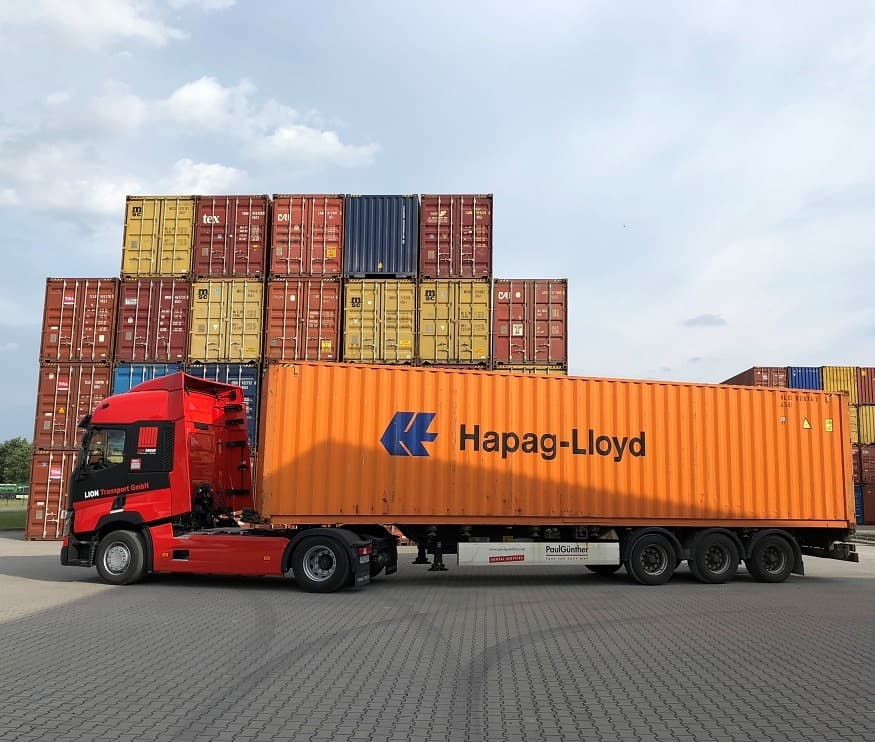
How Much is the Cost of Used Shipping Container in Kenya
Are you thinking about buying a used shipping container in Kenya? It’s a smart move for many needs, from storage to building unique spaces. But the first question on everyone’s mind is: “How much will it cost?” Read on to find out.
Read Article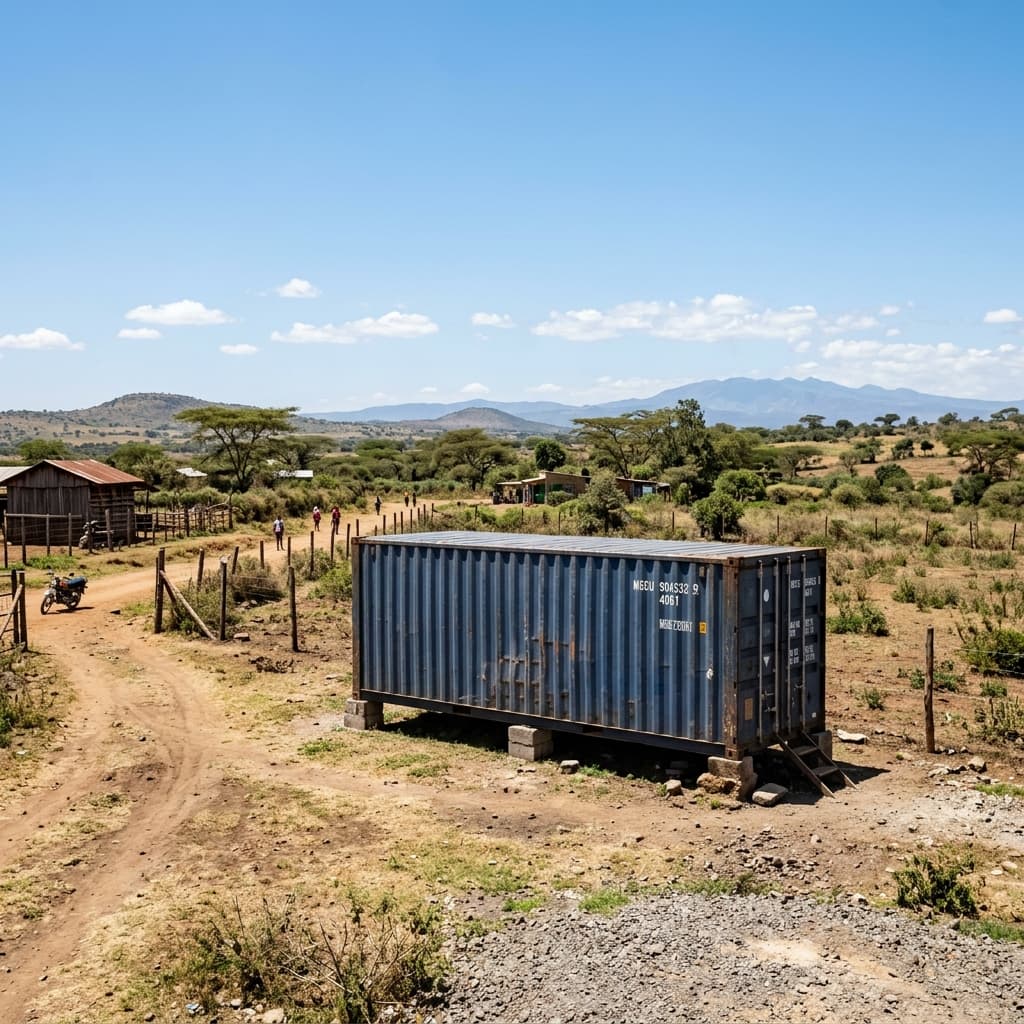 24 May 2025
How Much is the Price for a 40ft Shipping Container in Kenya?
Are you looking to buy a 40ft shipping container in Kenya? This is a popular choice for many projects, from big storage needs to building spacious container homes or offices. One of the first questions people ask is about the price.
Read Article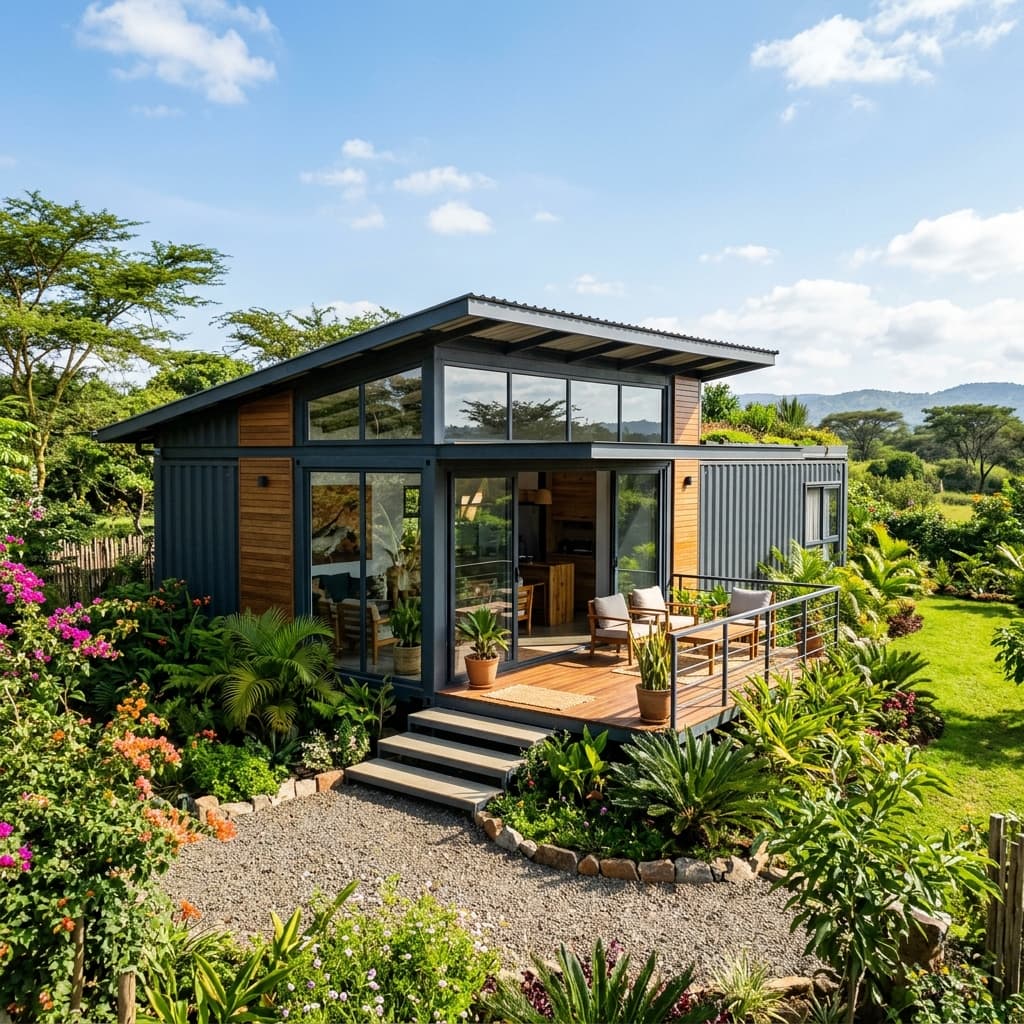 2 June 2025
How much does a container home cost in Kenya?
Dreaming of a unique, affordable, and stylish home in Kenya? A container home could be your answer! Shipping containers are strong, eco-friendly, and can be transformed into beautiful living spaces. But how much does a container home cost in Kenya?
Read Article