Container Home Interior Design Ideas in Kenya 2026 — Inspiring Spaces
One of the most exciting things about container home design is that the constraints of the space force creativity. When you are working with a 40ft container (30 sq.m), every square metre has to work harder than in a conventional house. The result — when done well — is some of the most innovative, beautiful, and deeply functional interior design you will find anywhere. Here are the most inspiring and practical interior ideas for container homes in Kenya.
Need an exact quote? Call us now.
We answer container questions 24/7.
Maximising Small Spaces: The Core Principle
The fundamental principle for container home interior design is: every element must serve multiple purposes. In a conventional house, rooms are assigned single functions. In a container home, the living room might also be the dining room, the home office, and the entertainment room — and it should do all of these jobs beautifully.
Multi-function furniture: - Murphy bed (wall bed): A fold-down bed that disappears into the wall during the day. The wall becomes a storage unit, desk, or shelving. This single item transforms a studio into a fully functional living space in seconds. Cost: Kshs 35,000–80,000 custom-built. - Sofa bed: A quality sofa that converts to a guest bed. Essential for a studio or small one-bedroom unit. - Dining table with storage: A dining table with built-in drawers or a foldable leaf that extends for dinners and folds away for daily use. - Ottoman with storage: The coffee table is also the storage unit for bedding, toys, and miscellaneous items.
Furniture sizing: Scale furniture to the space. A 3-seater sofa dominates a 30 sq.m space. Two mid-sized armchairs and a small sofa, or a custom L-shaped bench along the wall, use space more efficiently.
Vertical thinking: Container homes have wall space that is rarely used fully. Floor-to-ceiling shelving, hanging bike racks, magnetic knife strips in the kitchen, and pegboard wall panels for tools all maximise vertical space that would otherwise be wasted.
Colour Psychology for Compact Rooms
Colour has a disproportionate impact in small spaces — it can make a 15 sq.m room feel spacious or claustrophobic.
Light colours expand space: White, cream, light grey, pale sage, and soft yellow all reflect light and create an impression of a larger space. In a container studio or small bedroom, we recommend using these for at least three of the four walls.
Accent wall strategy: Paint three walls a light neutral and one wall (typically the end wall facing the main view) a bold accent colour — deep blue, forest green, terracotta. This creates depth and visual interest without making the space feel smaller.
Continuity of colour: Using the same flooring and wall colour throughout a small space (without thresholds and colour changes at doorways) makes the space read as larger and more unified.
Natural materials add warmth: Raw wood, woven baskets, terracotta pots, and jute rugs add warmth to a space that might otherwise feel cool or industrial. These materials also resonate with Kenya's design heritage.
Dark ceilings: Counterintuitively, a dark ceiling (navy, charcoal, deep green) makes a room feel more intimate and less like a steel tube. Combined with downlights and pendant lights, a dark ceiling can be dramatic and beautiful in a container home.
The Exposed Industrial Aesthetic
One of the most popular interior styles for container homes globally — and increasingly in Kenya — is the exposed industrial aesthetic:
What it is: Rather than hiding the container's industrial origins, this style celebrates them. Raw corrugated steel walls (painted in a single colour), exposed steel roof ribs, bare concrete or polished screed floors, steel pipe handrails, and industrial light fixtures.
Why it works: - Very cost-effective — you skip the cost of covering all surfaces - Highly photogenic and shareable on social media - Ages well — the industrial aesthetic is timeless - Works naturally with Kenya's growing appreciation for modern design
Key elements: - Edison bulb pendant lights: Hanging over a dining table or in a kitchen, these simple bulbs in an industrial cage fitting are both functional and beautiful. - Matte black fixtures: Taps, door handles, light switches in matte black. A simple but powerful design choice. - Steel staircase: If you have a two-storey configuration, a floating steel staircase is a showpiece. More affordable than it looks. - Pipe shelving: Steel pipe brackets with reclaimed wood or new timber shelves. Strong, adjustable, and genuinely attractive.
Balance the industrial with soft elements: A sheepskin rug, cushions in warm tones, potted plants, and wooden cutting boards soften the industrial aesthetic and make the space feel lived-in rather than like a factory.
Tropical and Swahili Fusion Design
Kenya has a rich design heritage — coastal Swahili architecture, the vivid colours of Maasai textiles, and the natural materials of the highlands all offer a uniquely Kenyan aesthetic for container interiors:
Swahili coastal elements: - Carved wooden furniture (beds, chairs, decorative panels) in the Lamu or Swahili tradition - White lime-washed walls (using white paint to create the look of traditional coral stone) - Brass fixtures — taps, door handles, pendant light fittings - Woven palm mats (mkeka) and printed cotton textiles in rich patterns
Highland Kenya elements: - Cedar and cypress wood (abundant in Kenya) for flooring, furniture, and wall panels - Woven sisal baskets as display items and storage - Terracotta tiles and pots - Earth tones — ochre, burnt sienna, clay
Tropical greenery: Bring the outside in with large-leafed tropical plants (peace lily, bird of paradise, monstera) that thrive in Kenya's climate. A large potted plant in a corner transforms a steel container into a living space.
Loft Sleeping Area: Double Your Usable Space
The extra ceiling height of a High Cube container (2.89m interior) opens up a design option that standard containers and conventional houses rarely have: a sleeping loft.
The concept: A mezzanine platform (loft bed) is built at approximately 1.7m height — high enough for a person to sit up in bed (0.9m clearance above the mattress) while maintaining adequate head clearance below (0.9m) for the living area under the loft.
What goes under the loft: The space under the loft is typically used as: a home office desk, a wardrobe, a seating area, or a bathroom. This effectively doubles the usable floor area from one level of the container.
Construction: A steel RHS frame bolted to the container walls, topped with 18mm structural plywood. Access via a custom ladder (5–7 rungs, wall-mounted) or compact spiral staircase. Cost: Kshs 45,000–80,000 for the platform and ladder.
When it works best: A single 40ft container used as a studio apartment. The loft sleeping area creates a sense of separation between sleeping and living zones without requiring a physical wall partition.
Built-In Storage and Kitchen Design
In a compact container home, built-in storage is essential. Furniture that sits against walls (rather than in the middle of the floor) is almost always more space-efficient.
Built-in wardrobe wall: A full floor-to-ceiling wardrobe built into one end wall of the bedroom. Custom doors in a sliding configuration take no floor space when opened. Cost: Kshs 60,000–120,000 for a 3m wide built-in wardrobe.
Kitchen storage: Well-designed container kitchens use every vertical space. Upper cabinets from counter height to ceiling, deep lower drawers (better than doors for pots and pans), and a pull-out pantry cabinet.
Galley kitchen layout: Counters on both sides of a narrow kitchen corridor — the most efficient layout for the width of a shipping container. Everything is within arm's reach.
Fold-down desk: A wall-mounted fold-down desk creates a home office or study space that disappears when not in use. Essential for a studio apartment.
Outdoor deck extension: The most impactful upgrade for any container home is a timber deck extending from the main entrance. A 3m × 4m deck creates an outdoor living room that effectively doubles the socialising space. Cost: Kshs 80,000–160,000.
Frequently Asked Questions
How do I make a container home feel bigger inside?+
Use light colours on walls and ceiling, maximise natural light with large windows and glass doors, avoid large furniture in the middle of the room (push everything to the walls), use mirrors (they visually double the space), and maintain consistent flooring throughout without thresholds.
What is the best flooring for a container home in Kenya?+
Anti-slip vinyl tiles (Kshs 600–900/sq.m) are the most popular — affordable, moisture-resistant, and available in many designs. Ceramic tiles (Kshs 900–1,800/sq.m) are more durable. Engineered wood flooring (Kshs 1,800–3,500/sq.m) adds warmth and is a premium choice for bedrooms.
Can a container home be designed to look like a conventional house inside?+
Yes, completely. With gypsum board on walls and ceiling, standard skirting and door frames, painted surfaces, and standard flooring, most visitors cannot tell they are inside a container.
What plants work well inside a container home in Kenya?+
Large-leafed tropical plants thrive in Kenya's climate: peace lily, monstera deliciosa, snake plant (sansevieria), pothos, and bird of paradise. These don't require a lot of natural light and are hardy.
What lighting works best in a container home?+
LED strip lights under upper cabinets and shelves, pendant lights over dining areas, and recessed downlights in false ceilings are all excellent. For an industrial aesthetic, exposed Edison bulbs on a simple rail give great character. Prioritize natural light with well-placed windows.
How much does interior fit-out add to a container home cost?+
Basic fit-out (standard tiles, painted walls, simple kitchen cabinets) adds Kshs 150,000–300,000 per container. Mid-range finish adds Kshs 300,000–500,000. High-end finish (polished concrete, custom joinery, premium fixtures) adds Kshs 500,000–900,000+.
Ready to Buy?
Call or WhatsApp us for pricing on any container product in Kenya.
Related Guides
Container Guides & Insights
Expert advice on prices, buying, and building with shipping containers across Kenya.
 24 May 2025
How Much is the Cost of Used Shipping Container in Kenya
Are you thinking about buying a used shipping container in Kenya? It’s a smart move for many needs, from storage to building unique spaces. But the first question on everyone’s mind is: “How much will it cost?” Read on to find out.
Read Article 24 May 2025
How Much is the Price for a 40ft Shipping Container in Kenya?
Are you looking to buy a 40ft shipping container in Kenya? This is a popular choice for many projects, from big storage needs to building spacious container homes or offices. One of the first questions people ask is about the price.
Read Article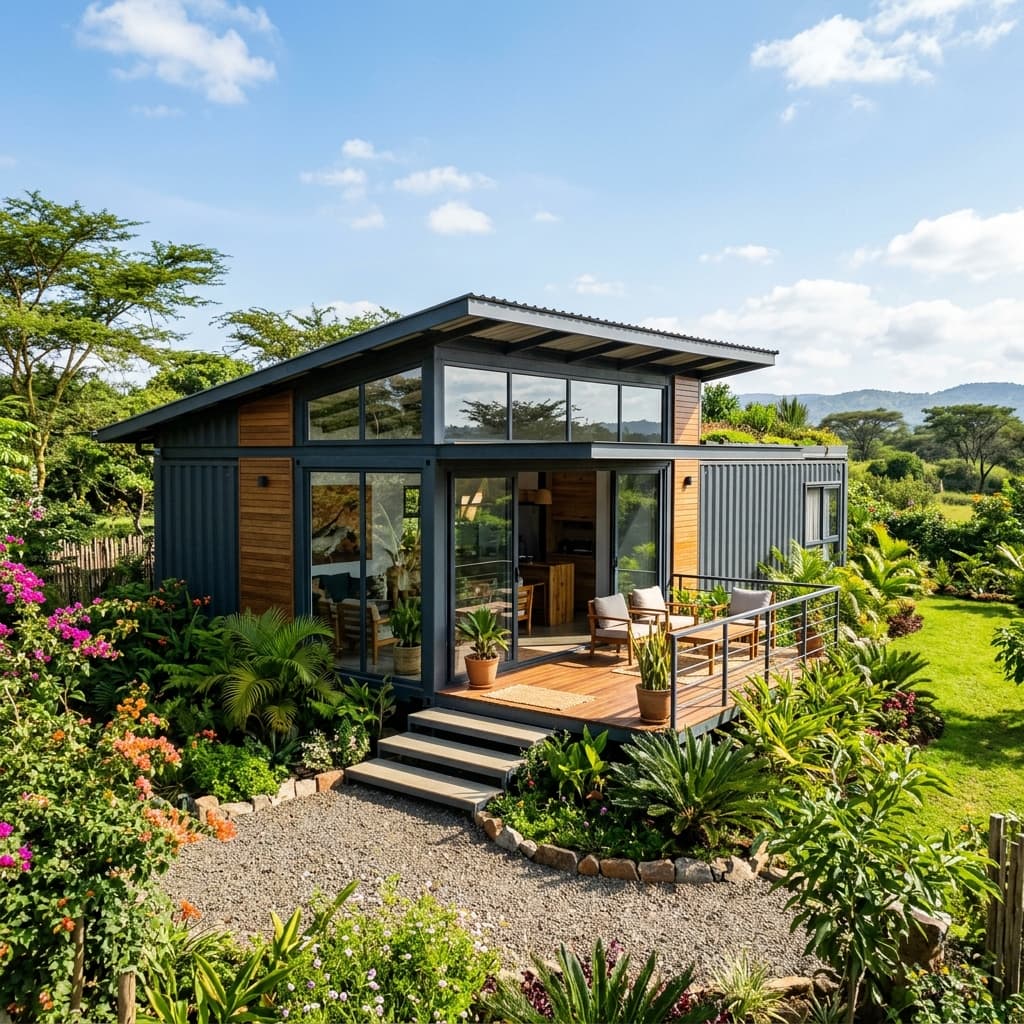 2 June 2025
How much does a container home cost in Kenya?
Dreaming of a unique, affordable, and stylish home in Kenya? A container home could be your answer! Shipping containers are strong, eco-friendly, and can be transformed into beautiful living spaces. But how much does a container home cost in Kenya?
Read Article