Refrigerated Container (Reefer) for Sale in Kenya — Prices & Uses 2026
A refrigerated shipping container — known in the industry as a reefer — is a standard ISO container with a built-in refrigeration unit that can maintain temperatures from -25°C (deep freeze) to +25°C (ambient controlled). In Kenya, reefers are transforming how farmers, exporters, pharmacies, supermarkets, restaurants, and horticultural companies store and transport temperature-sensitive goods. This guide covers how they work, power requirements, the major industries using them, and realistic 2026 pricing.
Need an exact quote? Call us now.
We answer container questions 24/7.
How Refrigerated Containers Work
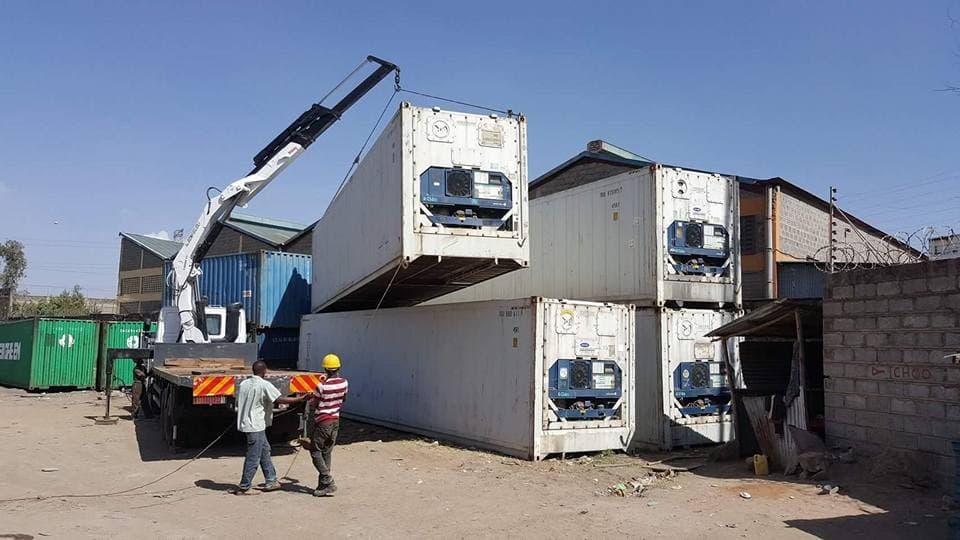
A reefer container is structurally similar to a standard dry container but with two critical modifications: thick insulated walls (polyurethane foam insulation typically 100–120 mm thick on walls, floor, and ceiling) and a built-in refrigeration unit mounted at one end.
The refrigeration unit: The integral refrigeration unit (made by manufacturers like Carrier, Thermo King, or Daikin) is mounted inside the front wall of the container. It pulls warm air from the cargo space, chills it over evaporator coils, and circulates the cooled air through T-bar aluminium flooring channels that run the length of the container. Cold air flows underneath the cargo and rises through it, creating even temperature distribution throughout.
Temperature control: Modern reefer units allow precise temperature control across a wide range: - Deep freeze: -25°C to -18°C (frozen meat, fish, ice cream) - Chilled: 0°C to +4°C (fresh produce, dairy, pharmaceuticals, vaccines) - Cool/Conditioned: +5°C to +15°C (wine, certain fruits, electronics) - Controlled ambient: +15°C to +25°C (flowers, some pharmaceuticals, chocolate)
Controlled atmosphere (CA) reefers: High-end reefers can also control oxygen and CO₂ levels in addition to temperature — used for fresh flower export and high-value produce. These units are more expensive but dramatically extend shelf life.
Humidity control: Most modern reefers allow humidity control, critical for flowers, fresh vegetables, and pharmaceutical products that suffer from moisture loss or condensation.
Power Requirements for Reefer Containers in Kenya
The most important practical consideration for reefer containers in Kenya is reliable power. The refrigeration unit is electrically powered and draws significant current — sizing your power supply correctly is non-negotiable.
Power supply options:
Grid power (Kenya Power) The most cost-effective long-term option. Most reefer units require 380V–440V three-phase power at 32–63 amps depending on unit size and ambient temperature. Important: standard domestic single-phase connections cannot power a reefer — you need a three-phase industrial connection.
Connection cost: A new three-phase Kenya Power connection typically costs Kshs 150,000–400,000 depending on distance from the transformer and KPLC approval process.
Generator (genset) For locations without reliable grid power, a dedicated generator is necessary. Match generator capacity to the reefer unit's rated power consumption plus a 20% safety margin. Typical reefer units require a 20–45 kVA generator. Running costs (fuel, maintenance) must be factored into operational budgets.
PTI (Pre-Trip Inspection) requirement: Before loading perishable cargo, reefer containers must pass a Pre-Trip Inspection — a functional test verifying the unit maintains set temperature. This is especially important for export shipments.
Backup power: For critical cold chain applications (pharmaceuticals, vaccines, high-value exports), a backup generator or UPS system is essential. A power outage of even a few hours can ruin perishable cargo worth millions of shillings.
Industries Using Reefer Containers in Kenya
Kenya's agricultural exports, growing food retail sector, and expanding pharmaceutical market are driving significant demand for reefer containers. Here are the primary industries:
Floriculture (Flower Export) Kenya is the world's third largest cut flower exporter. Lake Naivasha's farms and others in the Rift Valley use reefer containers to pre-cool flowers immediately after cutting and maintain them at 2–4°C through the supply chain to Europe. A single reefer can handle the output of 2–5 hectares of farm.
Fresh Produce Export Avocados, French beans, sugar snap peas, and other high-value horticultural products exported to Europe and the Middle East travel in reefers. Small and medium farmers increasingly pool produce to fill shared reefer containers.
Pharmaceuticals & Vaccines Hospitals, pharmacies, and health NGOs use reefer containers as supplementary cold stores for vaccines, blood products, and temperature-sensitive medications. The WHO cold chain requirements for many vaccines demand 2–8°C storage.
Supermarkets & Food Retail Growing Kenyan supermarket chains (Naivas, QuickMart, Carrefour suppliers) use reefer containers as overflow cold storage during high season or to stage central distribution.
Meat & Fish Processing Meat processors, fish mongers at Naivasha and Victoria Lake, and halal butcheries use reefers for holding stock at -18°C to -20°C. A reefer container is cheaper to set up than a purpose-built cold room of equivalent size.
Restaurants & Hospitality Hotels, large restaurants, and catering companies use reefers as supplementary cold stores — especially for function and events.
Seed & Agricultural Input Storage Certified seed companies and agro-vet chains use reefers to maintain seed viability and extend shelf life of temperature-sensitive agro-chemicals.
20ft vs 40ft Reefer Containers — Which Is Right for You?
Reefer containers come in both 20ft and 40ft sizes. Choosing the right size depends on your storage volume, power budget, and operational needs.
20ft Reefer Container: - Internal volume: approximately 28–30 CBM - Floor area: approximately 14 sq.m - Power draw: typically 7–12 kW (about 15–25 kVA generator) - Best for: small farms, pharmacies, boutique restaurants, pilot projects - Price range: Kshs 800,000–1,400,000
40ft Reefer Container: - Internal volume: approximately 60–67 CBM - Floor area: approximately 28 sq.m - Power draw: typically 12–20 kW (about 25–45 kVA generator) - Best for: large farms, export operations, supermarket chains, meat processors - Price range: Kshs 1,400,000–2,500,000
High Cube Reefer: 40ft High Cube reefers exist and offer extra stacking height for pallet-heavy operations. They are less common in Kenya but available on order.
New vs Used Reefer: Unlike dry containers where used WWT is usually the right choice, reefer containers require more careful consideration of the refrigeration unit's age and service history. A used reefer with a well-maintained Carrier or Thermo King unit and full service records can be excellent value. A reefer with an aging or poorly maintained refrigeration unit may cost more in repairs than savings on purchase price.
Buying a Reefer Container in Kenya — What to Check
Purchasing a reefer container is more complex than a standard dry container because the refrigeration unit is a mechanical system with its own service history, parts availability, and performance characteristics.
Key checks before buying a used reefer:
Refrigeration unit brand & model Carrier, Thermo King, and Daikin are the most serviceable brands in Kenya with local spare parts availability. Check that parts for the specific model are available in Nairobi.
PTI (Pre-Trip Inspection) test Run a live PTI test: set the unit to -18°C and verify it pulls down from ambient temperature to set point within the specified time. A healthy unit should pull down to -18°C in approximately 4–8 hours depending on ambient and unit size.
Compressor condition The compressor is the most expensive reefer component. Compressor hours (on the unit hour meter) indicate total run time. Compressor replacement can cost Kshs 150,000–400,000.
Insulation integrity Check for condensation or moisture between insulation panels — a sign of insulation compromise that drastically reduces efficiency and eventually destroys the structure.
Evaporator and condenser coils Both coil sets should be clean and undamaged. Blocked or corroded coils reduce efficiency and eventually fail.
Controller/display The microprocessor controller should display accurate temperatures and respond correctly to setpoint changes.
At Frontier Containers, we source reefers with documented service histories and run PTI tests before sale. Call us to discuss availability of specific brands and temperature ratings.
Setting Up a Reefer Container Cold Store in Kenya
Once you have your reefer container, setting it up correctly determines how efficiently and reliably it operates long-term.
Site selection: - Shade the container from direct equatorial sun where possible — a simple shade structure reduces compressor load by 20–30% - Ensure air flow around the condenser end (front of the unit) — minimum 1 metre clearance - Level ground is essential — even a 1–2 degree tilt affects refrigerant flow
Electrical connection: - Hire a certified electrician to connect to the power source - Install a dedicated circuit breaker sized to the unit's FLA (Full Load Amps) plus 25% - Use the correct cable gauge for the run length — undersized cable causes voltage drop and premature compressor failure
Earthing: Reefer containers must be properly earthed. The steel container body acts as a ground but a dedicated earth rod to the unit is required.
Temperature monitoring: Install a separate digital thermometer with a remote display or SMS/app alarm. Do not rely solely on the unit's own display for 24/7 operations.
Maintenance schedule: - Clean condenser coils every 1–3 months (compressed air or low-pressure water) - Check refrigerant level annually - Service the unit every 6–12 months depending on run hours - Keep service records for insurance and resale purposes
Refrigerated Container Price Guide — Kenya 2026
Reefer prices depend heavily on brand, unit age, and condition. Call 0715 557 559 for current stock and exact quotes.
💡 These are indicative ranges. Call us for your exact quote: 0715 557 559
Frequently Asked Questions
How much does a refrigerated container cost in Kenya in 2026?+
A used working 20ft reefer container costs Kshs 800,000–1,100,000. A refurbished 20ft reefer is Kshs 1,000,000–1,400,000. A 40ft reefer ranges from Kshs 1,200,000 (used) to Kshs 2,500,000 (new). Price depends on unit brand, age, and condition.
What power supply does a reefer container need in Kenya?+
Most reefer containers require 380V–440V three-phase power at 32–63 amps. A standard domestic single-phase connection is not sufficient. You need either a three-phase Kenya Power connection or a generator of 20–45 kVA capacity depending on unit size.
Can I use a reefer container for flower storage in Kenya?+
Yes. Reefer containers are widely used for flower pre-cooling and storage in Kenya's floriculture industry, especially in the Naivasha and Thika areas. Set temperature to 2–4°C for cut flowers. For long-term storage and export, a controlled atmosphere (CA) reefer is the premium option.
How much does it cost to run a reefer container per month?+
Running costs depend on ambient temperature, frequency of door opening, and power tariff. On three-phase Kenya Power at the commercial tariff (roughly Kshs 25–30 per kWh), a 20ft reefer at -18°C running 24/7 consumes approximately 180–250 kWh per day — roughly Kshs 130,000–220,000 per month on grid power. On generator power, fuel costs are significantly higher.
Which reefer brands have spare parts available in Kenya?+
Carrier and Thermo King have the widest spare parts availability in Kenya, with authorised service agents in Nairobi. Daikin and Mitsubishi parts are also obtainable but may require ordering. When buying a used reefer, confirm parts availability for the specific model before purchase.
Can a reefer container replace a purpose-built cold room?+
For most small to medium operations, yes. A reefer container offers several advantages over a purpose-built cold room: it is mobile (can be relocated), quicker to commission (no construction time), lower upfront capital, and simpler to finance. The main trade-off is higher long-term power costs compared to a purpose-built room with thicker insulation.
Ready to Buy?
Call or WhatsApp us for pricing on any container product in Kenya.
Related Guides
Container Guides & Insights
Expert advice on prices, buying, and building with shipping containers across Kenya.
 24 May 2025
How Much is the Cost of Used Shipping Container in Kenya
Are you thinking about buying a used shipping container in Kenya? It’s a smart move for many needs, from storage to building unique spaces. But the first question on everyone’s mind is: “How much will it cost?” Read on to find out.
Read Article 24 May 2025
How Much is the Price for a 40ft Shipping Container in Kenya?
Are you looking to buy a 40ft shipping container in Kenya? This is a popular choice for many projects, from big storage needs to building spacious container homes or offices. One of the first questions people ask is about the price.
Read Article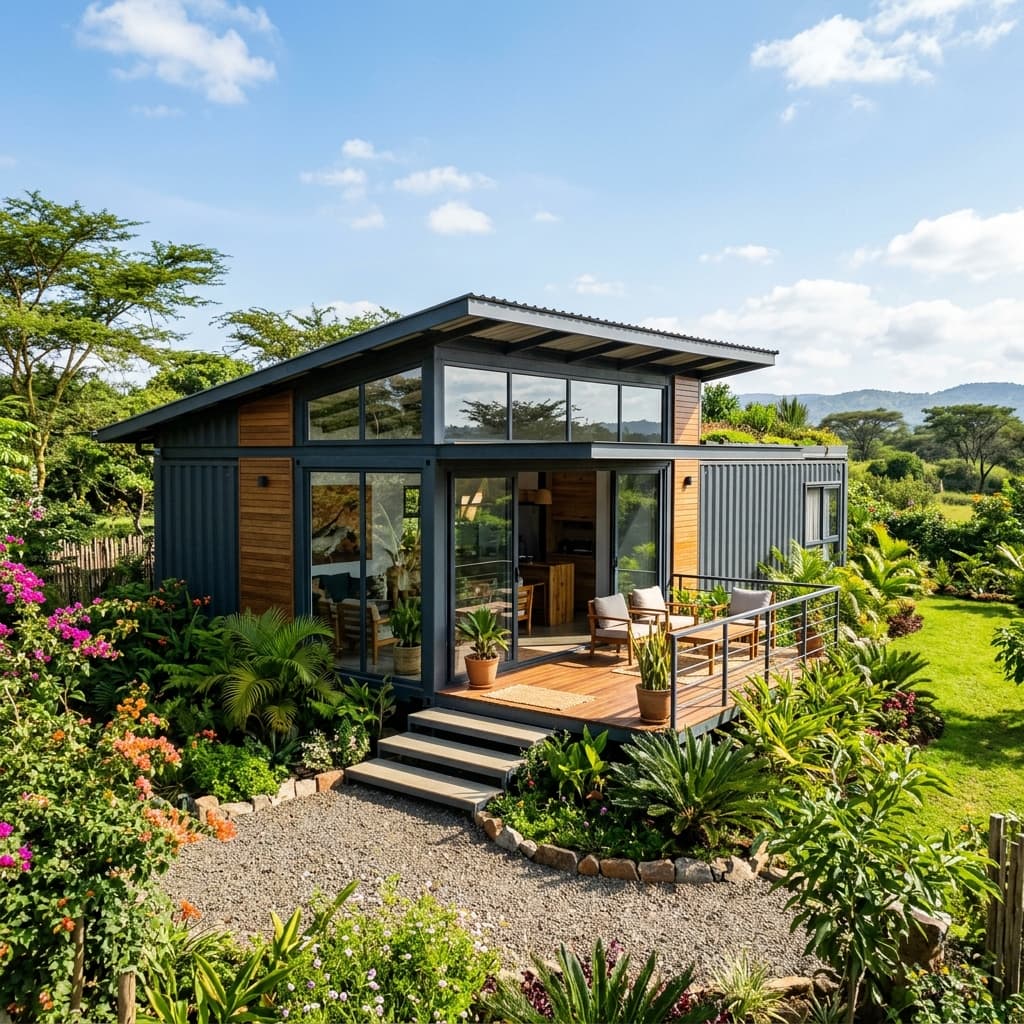 2 June 2025
How much does a container home cost in Kenya?
Dreaming of a unique, affordable, and stylish home in Kenya? A container home could be your answer! Shipping containers are strong, eco-friendly, and can be transformed into beautiful living spaces. But how much does a container home cost in Kenya?
Read Article