Container Cold Rooms & Cold Storage in Kenya 2026: Full Guide
Cold storage is one of Kenya's most critical infrastructure gaps — it is estimated that over 40% of fresh produce in Kenya is lost to post-harvest spoilage due to inadequate cold chain. Container cold rooms offer businesses, farms, and institutions a fast, flexible, and cost-effective solution to cold storage — deployable anywhere in Kenya, from the Naivasha flower farms to the coast's fishing communities.
Need an exact quote? Call us now.
We answer container questions 24/7.
What Is a Container Cold Room?
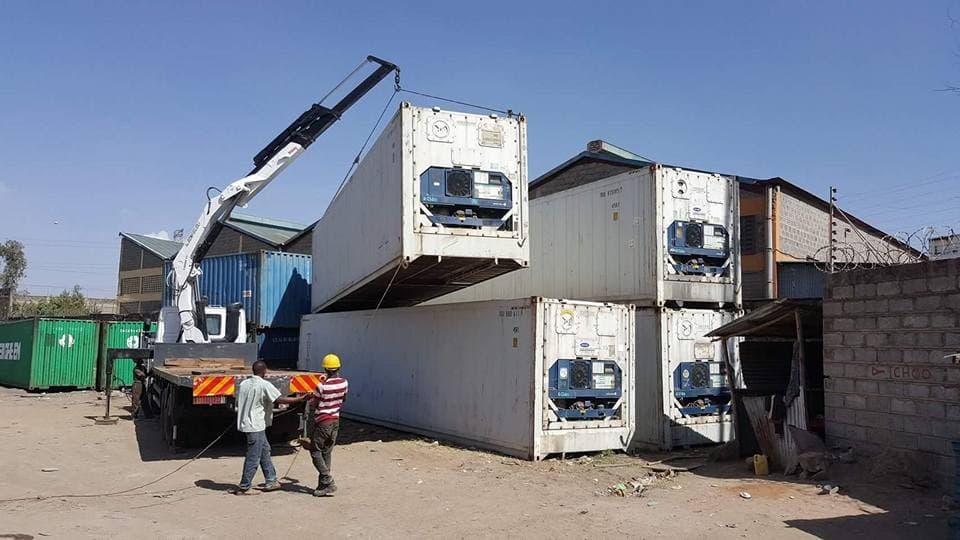
A container cold room (also called a reefer conversion or cold storage container) is a standard ISO shipping container that has been converted into a refrigerated storage unit. The conversion involves:
High-density insulation: 100mm–150mm PIR (Polyisocyanurate) foam panel insulation on walls, floor, and ceiling. PIR has the best thermal performance of any insulation material available — critical for maintaining temperatures in Kenya's warm climate.
Industrial refrigeration unit: A commercial-grade refrigeration compressor and evaporator unit, sized to the container volume and target temperature range. We use Bitzer, Embraco, and Carrier units — the same brands used in supermarkets and cold chain logistics.
Anti-condensation measures: Vapour barriers throughout prevent moisture from compromising insulation. All seams and penetrations are sealed with cold-rated foam tape.
Cold room door: A hinged, fully insulated cold room door with magnetic seal, safety release from inside, and thermal break threshold.
Temperature Ranges and Applications
Container cold rooms in Kenya are built for three main temperature zones:
Freezer (-18°C to -25°C) For frozen food storage: ice cream, frozen fish, frozen meat, ice blocks. Requires a heavy-duty compressor and 150mm insulation. Power consumption: approximately 8–15 kWh/day depending on ambient temperature and loading frequency.
Chiller (+1°C to +5°C) For fresh produce, dairy, beverages, flowers, and pharmaceuticals. This is the most common range in Kenya. A 20ft chiller maintains +2°C with ambient temperatures of 30°C+. Power consumption: approximately 4–8 kWh/day.
Controlled Atmosphere (0°C to +8°C) For specific applications like wine storage, cheese maturation, or medical cold chain. Uses a more precise thermostat and optional humidity control.
Dual-zone containers: A single 40ft container can be divided into two independent zones — one freezer side and one chiller side — with a shared electrical supply but independent refrigeration units.
Who Needs a Container Cold Room in Kenya?
Floriculture farms: Naivasha, Thika, Limuru, and Mount Kenya region farms growing roses, carnations, and mixed flowers need cold rooms for flower holding before export. Temperature range: +2°C to +5°C. A 20ft unit holds 3–4 tonnes of cut flowers.
Supermarkets and food retailers: Medium-sized supermarkets (Quickmart, Naivas) use container cold rooms as backup cold storage or as the primary cold room in smaller branches.
Fish processing and distribution: Fish traders in Kisumu (Victoria Basin), Mombasa (coastal fish), and Nairobi markets use container freezers for fish storage and distribution.
Restaurants and hotels: Large restaurants, hotel kitchens, and catering companies need reliable, high-capacity cold storage.
Pharmacies and hospitals: Vaccines, biological samples, and temperature-sensitive medications require a +2°C to +8°C cold chain. Container cold rooms are increasingly used in peri-urban pharmacies and rural health facilities.
Horticultural exporters: Exporters of fresh vegetables (mangetout, French beans, avocados) to Europe need pre-cooling facilities before loading onto refrigerated trucks.
Dairy processors: Milk collection centres in Kiambu, Murang'a, and Nyandarua use container cold rooms to hold milk at +4°C before the tanker collection.
Technical Specifications
20ft Container Cold Room - Internal volume: approximately 28 cubic metres (28,000 litres) - Usable floor area: approximately 14 sq.m - Insulation: 100mm PIR panels (R-value 6.5+) - Refrigeration unit: 5–10 HP depending on target temperature - Power requirement: 3-phase 415V, 32A supply (or can be configured for single-phase with power factor correction) - Temperature range achievable: -25°C to +8°C
40ft Container Cold Room - Internal volume: approximately 60 cubic metres - Usable floor area: approximately 28 sq.m - Insulation: 120mm PIR panels for chiller, 150mm for freezer - Refrigeration unit: 10–20 HP - Power requirement: 3-phase 415V, 63A supply - Racking: optional steel shelving or pallet positions
High Cube variants: We strongly recommend using High Cube (9'6") containers for cold rooms — the extra headroom allows better air circulation from the evaporator unit above, and provides space for hanging flower racks or meat hooks.
Power Supply Requirements
This is the most critical planning item for a container cold room. Cold rooms require reliable, stable power:
3-phase power: Industrial cold rooms (5 HP+) require a 3-phase, 415V supply. If you only have single-phase power, we can supply a phase converter — but this adds cost and reduces efficiency.
Generator backup: We strongly recommend a standby generator sized to run the cold room during KPLC outages. A generator adds Kshs 150,000–400,000 to your budget but is essential for product protection.
Solar integration: For off-grid locations (remote farms, rural health centres), we design solar + battery + inverter systems to power container cold rooms. A 20ft chiller can be powered by a 15–20kWp solar array with a lithium battery bank.
Voltage stabiliser: Kenya's grid voltage is notoriously unstable in many areas. A voltage stabiliser (Kshs 30,000–80,000) protects the compressor from damage.
Installation and Site Requirements
Foundation: Cold rooms must be placed on a level, compacted concrete slab. An uneven base causes door seal problems and drainage issues. The slab must have a slight slope (1:100) for defrost water drainage.
Shade structure: Direct sun on the refrigeration unit dramatically increases power consumption. We recommend a simple steel shade structure over the unit (Kshs 50,000–120,000).
Drainage: Defrost water from the evaporator must drain away from the unit. We install a condensate drain pipe during fit-out.
Access road: The delivery truck (flatbed + crane lorry) needs a clear access route. Minimum clearance: 4.5m height, 3.5m width, and load-bearing capacity for a 20-tonne vehicle.
Commissioning: After installation and electrical connection, our engineer commissions the refrigeration unit, verifies temperature uniformity, and provides operator training.
Container Cold Room Prices in Kenya (2026)
Prices include delivery within 50km of Nairobi. Refrigeration unit sizing depends on target temperature and ambient conditions. Generator and solar options quoted separately.
💡 These are indicative ranges. Call us for your exact quote: 0715 557 559
Frequently Asked Questions
How much does a container cold room cost in Kenya?+
A 20ft container chiller costs Kshs 1,500,000–2,200,000 installed. A 20ft freezer is Kshs 1,800,000–2,600,000. Prices vary based on target temperature, insulation thickness, and the refrigeration unit brand. Call 0715 557 559 for a detailed quote.
What power supply is needed for a container cold room?+
Most industrial cold rooms require a 3-phase 415V power supply, minimum 32A for a 20ft unit. We can configure some units for single-phase supply with power factor correction, but 3-phase is strongly preferred. Always include a standby generator in your planning.
Can a container cold room be used for flowers?+
Yes. We build many cold rooms specifically for floriculture in Naivasha and the Mount Kenya region. Flower cold rooms typically operate at +2°C to +4°C. We can design hanging racks and high-humidity settings for cut flower holding.
How much space does a 20ft cold room provide?+
A 20ft container cold room has approximately 28 cubic metres (28,000 litres) of internal volume and about 14 sq.m of usable floor area. In chiller mode it can hold approximately 5–8 tonnes of produce; in freezer mode approximately 3–5 tonnes.
Can container cold rooms work off-grid?+
Yes, with a properly designed solar + battery + inverter system. A 20ft chiller operating at +4°C can be powered by a 15–20 kWp solar array with a lithium iron phosphate battery bank. This is increasingly popular in remote farms and rural health centres.
How do I maintain a container cold room?+
Monthly: clean evaporator coils and check door seals. Every 6 months: check refrigerant levels, clean condenser, verify thermostat accuracy. Annually: full refrigeration system service by a qualified engineer. We offer service contracts for all units we supply.
Can the cold room be moved to a different location later?+
Yes — one of the major advantages of a container cold room is mobility. The refrigeration unit can be disconnected, the container can be loaded and moved, and the system reconnected at a new location. Relocation within Nairobi costs approximately Kshs 30,000–60,000.
Ready to Buy?
Call or WhatsApp us for pricing on any container product in Kenya.
Related Guides
Container Guides & Insights
Expert advice on prices, buying, and building with shipping containers across Kenya.
 24 May 2025
How Much is the Cost of Used Shipping Container in Kenya
Are you thinking about buying a used shipping container in Kenya? It’s a smart move for many needs, from storage to building unique spaces. But the first question on everyone’s mind is: “How much will it cost?” Read on to find out.
Read Article 24 May 2025
How Much is the Price for a 40ft Shipping Container in Kenya?
Are you looking to buy a 40ft shipping container in Kenya? This is a popular choice for many projects, from big storage needs to building spacious container homes or offices. One of the first questions people ask is about the price.
Read Article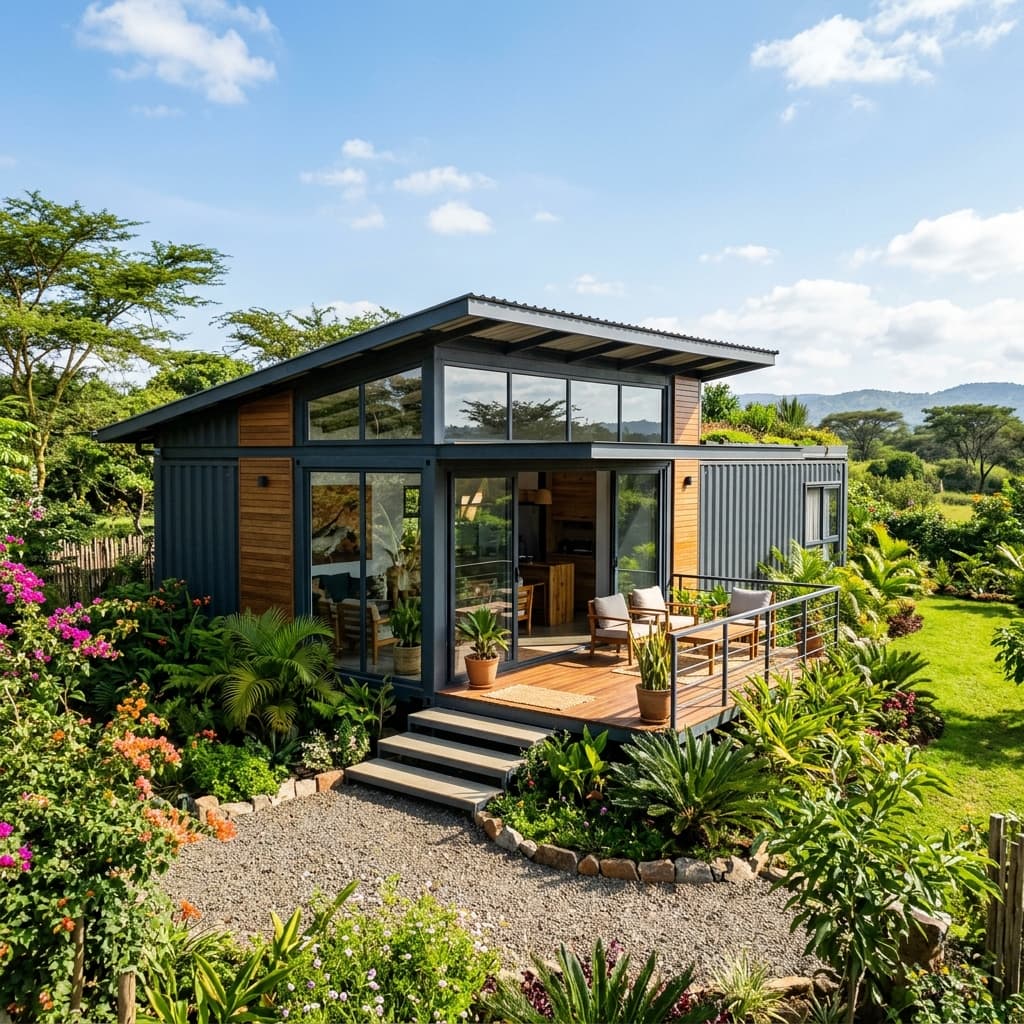 2 June 2025
How much does a container home cost in Kenya?
Dreaming of a unique, affordable, and stylish home in Kenya? A container home could be your answer! Shipping containers are strong, eco-friendly, and can be transformed into beautiful living spaces. But how much does a container home cost in Kenya?
Read Article